The Black-bearded Barbarian: The Life of George Leslie Mackay of Formosa
By Mary Esther Miller MacGregor (pseudonym for Marian Keith)
Published in 1912 by the New York Missionary Education Movement of the United States and Canada. This eBook is for the use of anyone anywhere at no cost and with almost no restrictions. You may copy it, give it away or re-use it under the terms of the Project Gutenberg License as set out on their website, www.gutenberg.org.
Limited editorial changes were made to enhance the readability of the book, while addenda were added to highlight subsequent events related to this pioneering missionary, and also to review the present religious situation in Taiwan.
“The Black-bearded Barbarian” was the name by which George Leslie Mackay was known among the Chinese of North Formosa – the northern part of the present Taiwan.
|
|
|

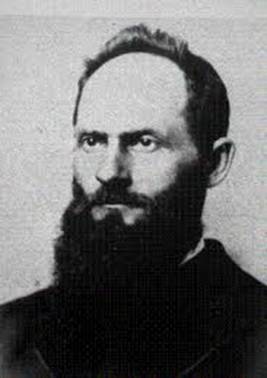
Contents
1. Splitting Rocks
2. A Voyage of Discovery
3. Reconnoitering the Territory
4. Beginning the Siege
5. Two Soldiers
6. The Great Kai Bok-su
7. Besieging Head-hunters
8. Cities Captured and Forts Built
9. Other Conquests
10. Reinforcements
11. Unexpected Bombardment
12. A Triumphal March
13. The Land Occupied
Addendum 1: A Modern Appraisal of Mackay’s Life and Work
Addendum 2: Present Religious Diversity in Taiwan
1. Splitting Rocks
Up in the stony pasture-field behind the barn the boys had been working all the long afternoon. Nearly all of them had managed to mix a good deal of fun with their labor. But now they were tired of both work and play and wondered audibly, many times over, why they were not yet called home to supper.
The work really belonged to the Mackay boys but, like Tom Sawyer, they had made it so attractive that several volunteers had come to their aid. Their father was putting up a new stone house near the old one down behind the orchard, and the two youngest of the family had been put at the task of breaking the largest stones in the field.
It meant only to drag some underbrush and wood from the forest skirting the farm, pile them on the stones, set fire to them, and let the heat do the rest. It had been grand sport at first, they all voted, better than playing shinny, and almost as good as going fishing. In fact it was a kind of free picnic, where one could play at Indians all day long. But as the day wore on the picnic idea had languished, and the stone-breaking became more and more like hard work.
The warm spring sunset had begun to color the western sky; the meadow-larks had gone to bed, and the stone-breakers were tired and ravenously hungry--as hungry as only wolves or country boys can be. The visitors suggested that they ought to be going home. "Hold on, Danny, just till this one breaks," said the older Mackay boy, as he set a burning stick to a new pile of brush.
"This'll be a dandy, and it's the last, too. They're sure to call us to supper before we've had time to do another."
The new fire, roaring and snapping, sending up showers of sparks and filling the air with the sweet odor of burning cedar, proved too alluring to be left. The company squatted on the ground before it, hugging their knees and watching the blue column of smoke go straight up into the colored sky. It suggested a camp-fire in war times, and each boy began to tell what great and daring deeds he intended to perform when he became a man.
Jimmy, one of the visitors who had been most enthusiastic over the picnic side of the day's work, announced that he was going to be a sailor. He would command a fleet on the high seas, capture pirates and grow fabulously wealthy on prize-money. Danny, who was also a guest, declared his purpose one day to lead a band of rough riders to the Western plains, where he would kill Indians, and escape fearful deaths by the narrowest hairbreadth.
"Mebbe I'm goin'to be Premier of Canada, some day," said one youngster, poking his bare toes as near as he dared to the flames. There were hoots of derision. This was entirely too tame to be even considered as a career.
"And what are you going to be, G. L.?" inquired the biggest boy of the smallest.
The others looked at the little fellow and laughed. George Mackay was the youngest of the group, and was a small, wiry youngster with a pair of flashing eyes lighting up his thin little face. He seemed far too small and insignificant to even think about a career. But for all the difference in their size and age the bigger boys treated little George with a good deal of respect. For, somehow, he never failed to do what he set out to do. He always won at races, he was never anywhere but at the head of his class, he was never known to be afraid of anything in field or forest or school ground, he was the hardest worker at home or at school, and by sheer pluck he managed to do everything that boys bigger and older and stronger could do.
So when Danny asked, "And what are you going to be, G. L.?" though the boys laughed at the small thin little body, they respected the daring spirit it held, and listened for his answer.
"He's goin' to be a giant, and go off with a show," cried one, and they all laughed again.
Little G. L. laughed too, but he did not say what he intended to do when he grew big. Down in his heart he held a far greater ambition than the others dreamed of. It was too great to be told--so great he scarcely knew what it was himself. So he only shook his small head and closed his lips tightly, and the rest forgot him and chattered on.
Away beyond the dark woods, the sunset shone red and gold between the black tree trunks. The little boy gazed at it wonderingly. The sight of those morning and evening glories always stirred his child's soul, and made him long to go away--away, he knew not where--to do great and glorious deeds. The Mackay boys' grandfather had fought at Waterloo, and little George Leslie, the youngest of six, had heard many, many tales of that gallant struggle, and every time they had been told to him he had silently resolved that, some day, he too would do just such brave deeds as his grandfather had done.
As the boys talked on, and the little fellow gazed at the sunset and dreamed, the big stone cracked in two, the fire died down, and still there came no welcome call to supper from any of the farmhouses in sight. The Mackay boys had been trained in a fine old-fashioned Canadian home, and did not dream of quitting work until they were summoned. But the visitors were merely visitors, and could go home when they liked.
The future admiral of the pirate-killing fleet declared he must go and get supper, or he'd eat the grass, he was so hungry. The coming Premier of Canada and the Indian-slayer agreed with him, and they all jumped the fence, and went whooping away over the soft brown fields toward home.
There was just one big stone left. It was a huge boulder, four feet across. "We'll never get enough wood to crack that, G. L.," declared his brother. "It just can't be done."
But little George answered just as anyone who knew his determination would have expected. In school he astonished his teacher by learning everything at a tremendous rate, but there was one small word he refused to learn--the little word "can't." His bright eyes flashed at the sound of it. He jumped upon the big stone and clenched his fist.
"It's GOT to be broken!" he cried. "I WON'T let it beat me." He leaped down, and away he ran toward the woods. His brother caught his spirit, and ran too. They forgot they were both tired and hungry. They seized a big limb of a fallen tree and dragged it across the field. They chopped it into pieces and piled it high upon the big stone with plenty of brush. In a few minutes it was all in a splendid blaze, leaping and crackling, and sending the boys' long shadows far across the field.
The fire grew fiercer and hotter, and suddenly the big boulder cracked in four pieces, as neatly as though it had been slashed by a giant's sword. Little G. L. danced around it, and laughed triumphantly. The next moment they heard the welcome "hoo-hoo" from the house behind the orchard, and away the two scampered down the hill toward home and supper.
When the day's work of the farmhouse had been finished, the Mackay family gathered about the fire, for the spring evening was chilly.
George Leslie sat near his mother, his face full of deep thought. It was the hour for family worship, and always at this time he felt most keenly that longing to do something great and glorious. Tonight his father read of a Man who was sending out His army to conquer the world. It was only a little army, just twelve men, but they knew their Leader had more power than all the soldiers of the world. And they were not afraid, though He said, "Behold, I send you forth as sheep in the midst of wolves." For He added, "Fear ye not," for He would march before them, and they would be sure of victory.
The little boy listened attentively. He did everything that way.
Surely this was a story of great and glorious deeds, even better than Waterloo, he felt. And there came to his heart a great longing to go out and fight wrong and put down evil as these men had done. He did not know that the longing was the voice of the great King calling His young knight to go out and "Live pure, speak true, right wrong, follow the King." But there came a day when he did understand, and on that day he was ready to obey.
When bedtime came the boys were asked if they had finished their work, and the story of the last big stone was told. "G. L. would not leave it," the brother explained. The father looked smilingly at little G. L. who still sat, dangling his short legs from his chair, and studying the fire.
He spoke to his wife in Gaelic. "Perhaps the lad will be called to break a great rock some day. The Lord grant he may do it."
The boy looked up wonderingly. He understood Gaelic as well as English, but he did not comprehend his father's words. He had no idea they were prophetic, and that away on the other side of the world, in a land his geography lessons had not yet touched, there stood a great rock, ugly and hard and grim, which he was one day to be called upon to break.
2. A Voyage of Discovery
The steamship America, bound for Hong Kong, was leaving the dock at San Francisco. All was bustle and noise and stir. Friends called a last farewell from the deck, handkerchiefs waved, many of them wet with tears. The long boom of a gun roared out over the harbor, a bell rang, and the signal was given. Up came the anchor, and slowly and with dignity the great vessel moved out through the Golden Gate into the wide Pacific.
Crowds stood on the deck to get a last glimpse of home and loved ones, and to wave to friends as long as they could be distinguished. There was one young man who stood apart from the crowd, and who did not wave farewell to anyone. He had come on board with a couple of men, but they had gone back to the dock, and were lost in the crowd. He seemed entirely alone. He leaned against the deck-railing and gazed intently over the widening strip of tumbling wafers to the city on the shore. But he did not see it. Instead, he saw a Canadian farmhouse, a garden and orchard, and gently sloping meadows hedged in by forest. And up behind the barn he saw a stony field, where long ago he and his brother and the neighbor boys had broken the stones for the new house.
His quick movements, his slim, straight figure, and his bright, piercing eyes showed he was the same boy who had broken the big rock in the pasture-field long before. Just the same boy, only bigger, and more man than boy now, for he wore an air of command and his thin keen face bore a beard, a deep black, like his hair. And now he was going away, as he had longed to go when he was a boy, and ahead of him lay the big frowning rock, which he must either break or be broken upon.
He had learned many things since those days when he had scampered barefoot over the fields, or down the road to school. He had been to college in Toronto, in Princeton, and away over in Edinburgh, in the old homeland where his father and mother were born. And all through his life that call to go and do great deeds for the King had come again and again. He had determined to obey it when he was but a little lad at school. He had encountered many big stones in his way, which he had to break before he could go on. But the biggest stone of all lay across his path when college was over, and he was ready and anxious to go away as a missionary.
The Presbyterian Church of Canada had never yet sent out a missionary to a foreign land, and some of the good old men bade George Mackay stay at home and preach the gospel there. But as usual he conquered. Everyone saw he would be a great missionary if he were only given a chance. At last the General Assembly gave its consent, and now, in spite of all stones in the way, here he was, bound for China, and ready to do anything the King commanded. Land was beginning to fade away into a gray mist, the November wind was damp and chill, he turned and went down to his stateroom. He sat down on his little steamer trunk, and for the first time the utter loneliness and the uncertainty of this voyage came over him. He took up his Bible and turned to the fly-leaf. There he read the inscription:
Presented to REV. G. L. MACKAY First missionary of the Canadian Presbyterian Church to China, by the Foreign Mission Committee, as a parting token of their esteem, when about to leave his homeland for the sphere of his future labors among the heathen. WILLIAM MACLAREN, Convener. Ottawa, 9th October, 1871. Matthew xxviii: 18-20. Psalm cxxi.
It was a moment of severe trial to the young soldier. But he turned to the Psalm marked on the fly-leaf of his Bible, and he read it again and again.
"My help cometh from the Lord which
made heaven and earth.
The Lord is thy keeper: the Lord is thy shade upon thy right hand.
The sun shall not smite thee by day, nor the moon by night."
The beautiful words gave him comfort. Homesickness, loneliness, and fears for the future all vanished. He was going out to an unknown land where dangers and perhaps death awaited him, but the Lord would be his keeper and nothing could harm him.
Twenty-six days on the Pacific! And a stormy voyage it was, for the Pacific does not always live up to her beautiful name, and she tossed the America about in a shocking manner. But the voyage did not seem long to George Mackay. There were other missionaries on board with whom he had become acquainted, and he had long delightful talks with them and they taught him many things about his new work. He was the same busy G. L. he had been when a boy; always working, working, and he did not waste a moment on the voyage. There was a fine library on the ship and he studied the books on China until he knew more about the religion of that country than did many of the Chinese themselves.
One day, as he was poring over a Chinese history, someone called him hastily to come on deck. He threw down his book and ran upstairs. The whole ship was in a joyous commotion. His friend pointed toward the horizon, and away off there against the sky stood the top of a snow-capped peak--Fujiyama!--the majestic, sacred mountain of Japan!
It was a welcome sight after the long ocean voyage, and the hours they lay in Yokahama harbor were full of enjoyment. Every sight was thrilling and strange to young Mackay's Western eyes. The harbor fairly swarmed with noisy, shouting, chattering Japanese boatmen. He wondered why they seemed so familiar, until it suddenly dawned on him that their queer rice-straw coats made them look like a swarm of Robinson Crusoes who had just been rescued from their islands.
When he landed he found things still funnier. The streets were noisier than the harbor. Through them rolled large heavy wooden carts, pulled and pushed by men, with much grunting and groaning. Past him whirled what looked like overgrown baby carriages, also pulled by men, and each containing a big grown-up human baby. It was all so pretty too, and so enchanting that the young missionary would fain have remained there. But China was still further on, so when the America again set sail he was on board.
Away they sailed further and further east, or was it west? He often asked himself that question in some amusement as they approached the coast of China. They entered a long winding channel and steamed this way and that until one day they sailed into a fine broad harbor with a magnificent city rising far up the steep sides of a hill. It was an Oriental city, and therefore strange to the young traveler. But for all that there seemed something familiar in the fine European buildings that lined the streets, and something still more homelike in that which floated high above them--something that brought a thrill to the heart of the young Canadian--the red-crossed banner of Britain!
It was Hong Kong, the great British port of the East, and here he decided to land. No sooner had the travelers touched the dock, than they were surrounded by a yelling, jostling crowd of Chinese laborers, all shouting in an outlandish gibberish for the privilege of carrying the Barbarians' baggage. A group gathered round Mackay, and in their eagerness began hammering each other with bamboo poles. He was well-nigh bewildered, when above the din sounded the welcome music of an English voice.
"Are you Mackay from Canada?" He whirled round joyfully. It was Dr. E. J. Eitel, a missionary from England. He had been told that the young Canadian would arrive on the America and was there to welcome him. Although the Canadian Presbyterian Church had as yet sent out no missionaries to a foreign land, the Presbyterian Church of England had many scattered over China. They were all hoping that the new recruit would join them, and invited him to visit different mission stations, and see where he would like to settle.
So he remained in Hong Kong that night as Dr. Eitel's guest, and the next morning he took a steamer for Canton. Here he was met on the pier by an old fellow student of Princeton University, and the two old college friends had a grand reunion. He returned to Hong Kong shortly, and next visited Swatow. As they sailed into the harbor, he noticed two Englishmen rowing out toward them in a sampan (a Chinese boat from twelve to fifteen feet long, covered with a house). No sooner had the ship's ladder been lowered, than the two sprang out of their boat and clambered quickly on deck. To Mackay's amazement, one of them called out, "Is Mackay of Canada on board?"
"Mackay of Canada," sprang forward delighted, and found his two new friends to be Mr. Hobson of the Chinese imperial customs, and Dr. Thompson of the English Presbyterian mission in Swatow. The missionaries here gave the stranger a warm welcome. At every place he had visited there had awaited him a cordial invitation to stay and work. And now at Swatow he was urged to settle down and help them. There was plenty to be done, and they would be delighted to have his help. But for some reason which Mackay himself could not properly explain, he wanted to see another place.
Away off the south-eastern coast of China lies a large island called Formosa. It is separated from the mainland by a body of water called the Formosa Channel. This is in some places eighty miles wide, in others almost two hundred. Mackay had often heard of Formosa even before coming to China, and knew it was famed for its beauty. Even its name shows this. Long, long years before, some navigators from Portugal sailed to this beautiful island. They had stood on the deck of their ship as they approached it, and were amazed at its loveliness.
They saw lofty green mountains piercing the clouds. They saw silvery cascades tumbling down their sides, flashing in the sunlight, and below there were terraced plains sloping down to the sea, covered with waving bamboo or with small water-covered rice-fields. It was all so delightful that no wonder they cried, "Illha Formosa! Illha Formosa!"
"Beautiful Isle! Beautiful Isle." Since that day the "Beautiful Isle," perhaps the most charming in all the world, has been called Formosa.
And, somehow, Mackay longed to see this "Beautiful Isle" before he decided where he was going to preach the gospel. And so when the kind friends at Swatow said, "Stay and work with us," he always answered, "I must first see Formosa."
So, one day, he sailed away from the mainland toward the Beautiful Isle. He landed at Takow in the south of the island, just about Christmas-time. But Formosa was green, the weather was hot, and he could scarcely believe that, at home in Oxford county, Ontario, they were flying over the snow to the music of sleigh-bells. On New Year's day he met a missionary of this south Formosa field, named Dr. Ritchie. He belonged to the Presbyterian Church of England, which had a fine mission there. For nearly a month Mackay visited with him and studied the language.
And while he visited and worked there the missionaries told him of the northern part of the island. No person was there to tell all those crowded cities of Jesus Christ and His love. It would be lonely for him there, it would be terribly hard work, but it would be a grand thing to lay the foundations, to be the first to tell those people the "good news," the young missionary thought. And, one day, he looked up from the Chinese book he was studying and said to Dr. Ritchie: "I have decided to settle in north Formosa." Dr. Ritchie's quick response was: "God bless you, Mackay."
As soon as the decision was made, another missionary, Dr. Dickson, who was with Mr. Ritchie, decided to go to north Formosa with the young man, and show him over the ground. So, early in the month of March in the year 1872, the three men set off by steamship to sail for Tamsui, a port in north Formosa. It took them two days to make the voyage, and a tropical storm pitched the small vessel hither and thither, so that they were very much relieved when they sailed up to the mouth of the Tamsui river.
It was low tide and a bare sand-bar stretched across the mouth of the harbor, so the anchor was dropped, and they waited until the tide should cover the bar, and allow them to sail in.
This wait gave the travelers a fine opportunity to see the country. The view from this harbor of the "Beautiful Island" was an enchanting one. Before them, toward the east, rose tier upon tier of magnificent mountains, stretching north and south. Down their sloping sides tumbled sparkling cascades and here and there patches of bright green showed where there were tea plantations. Further down were stretches of grass and groves of lovely feathery bamboo. And between these groves stretched what seemed to be little silvery lakes, with the reflection of the great mountains in them. They were really the famous rice-fields of Formosa, at this time of the year all under water. There were no fences around their little lake-fields. They were of all shapes and sizes, and were divided from each other by little green fringed dykes or walls. Each row of fields was lower than the previous one until they descended right down to the sea-level, and all lay blue and smiling in the blazing sunlight.
As the young missionary stood spellbound, gazing over the lovely, fairylike scene, Mr. Ritchie touched his arm: "This is your parish, Mackay," he whispered smilingly.
And then for the first time since he had started on his long, long journey, the young missionary felt his spirit at peace. The restlessness that had driven him on from one Chinese port to another was gone. This was indeed his parish.
Suddenly a signal swung out; the tide had risen. Up came the anchor, and away they glided over the now submerged sand-bar into the harbor.
A closer view showed greater charms of the Beautiful Isle. On the south, at their right, lay the great Quan Yin Mountain, towering seventeen hundred feet above them, clothed in tall grass and groves of bamboo, banyan and fir trees of every conceivable shade of green. Nestling at its feet were little villages almost buried under trees. Slowly the ship drifted along, passing a queer fishing village close to the sandy shore, then a light-house and further on a battered Chinese fort rising from the top of a hill.
And now Tamsui came in sight--the new home of the young missionary. It seemed to him that it was both the prettiest and dirtiest place he had ever seen. The town lay along the bank of the river at the foot of a hill. The bluff rose abruptly behind it to a height of two hundred feet. On its face stood a queer-looking building. It was red in color, solid and weather worn, and above it floated the grand old flag of Britain.
"That's an old Dutch fort," explained Mr. Ritchie, "left there since they were in the island. It is the British consulate now. There, next to it, is the consul's residence."
It was a handsome house, just below the fort, and surrounded by lovely gardens. But down beneath it, on the shore, was the most interesting place to the newcomer, the town of Tamsui proper, or Ho Be, as the Chinese called it. The foreigners landed and made their way up the street. To the two from south Formosa, Tamsui was like every other small Chinese town, but Mackay had not yet become accustomed to the strange sights and sounds and stranger smells, and his bright eyes were keen with interest.
The main thoroughfare wound this way and that, only seven or eight feet wide at its best. It was filled with noisy crowds of men who acted as if they were on the verge of a terrible fight. But the older missionaries knew that they were merely acting as Chinese crowds always do. On each side were shops--tea shops, rice shops, tobacco shops, and many other kinds. And most numerous of all were the shops where opium, one of the greatest curses of Chinese life, was sold. The front wall of each was removed, and the customers stood in the street and dickered with the shopkeeper, while at the top of his harsh voice the latter swore by all the gods in China that he was giving the article away at a terrific loss.
Hawkers pushed their way through the crowds, carrying their wares, balanced on poles across their shoulders. Boys with trays of Chinese candies and sugar-cane yelled their wares above the din. The visitors stumbled along over the rough stones of the pavement until they came to the market-place. Foreigners were not such a curiosity in Tamsui as in the inland towns, and not a great deal of notice was taken of them, but occasionally Mackay could hear the now familiar words of contempt --"Ugly barbarian"--"Foreign devil" from the men that passed them. And one man, pointing to Mackay, shouted "Ho! the black-bearded barbarian!"
It was a name the young missionary was destined to hear very frequently.
Past opium-dens, barber shops, and drug stores they went and through the noise and bustle and din of the market-place. They knew that the inns, judging by their outside, would be filthy, so Mr. Ritchie suggested, as evening was approaching, that they find some comfortable place to spend the night.
There was a British merchant in Tamsui named Mr. Dodd, whom the missionaries knew. So they went to him and were given fine quarters in his warehouse. They ate their supper here, from the provisions they had bought in the market, and stretching themselves out on their grass mats they slept soundly. The next day was Sunday, but the three travelers spent it quietly in the warehouse by the river, studying their Bibles and discussing their proposed trip. They concluded it was best not to provoke the anger of the people against the new missionary by preaching, so they did not go out. On the Monday they would start southward and take Mackay to the bounds of their mission field, and show him the land that was to be "his parish."
3. Reconnoitering the Territory
Early Monday morning Mackay peeped out of the big warehouse door at the great calm mountain shrouded in the pale mists of early dawn. The other two travelers were soon astir, and were surprised to find their young companion all ready. They were not yet well enough acquainted with him to know that he could do with less sleep at night than an owl. He was in high spirits and as eager to be off as he had ever been to start for a day's fishing in the old times back in Ontario. And indeed this was just a great fishing expedition he was commencing. For had not One said to him, long long ago when he was but a little boy, "Come follow Me, and I will make you to become a fisher of men"? and he had obeyed. The first task was to go out and buy food for the journey, and to hire a couple of servants to carry their baggage.
Dr. Dickson went off on this errand, and being well acquainted with Formosan customs and language, soon returned with two Chinese carriers and plenty of food. This last consisted of canned meats, biscuits, coffee, and condensed milk, bought at a store where ships' supplies were kept for sale. There was also some salted water-buffalo meat, a Chinese dish with which the young missionary was destined to become very familiar.
They started out three abreast, Mr. Ritchie's blue serge figure capped by a white helmet on the right, Dr. Dickson on the left in his Scotch tweed, and between them the alert, slim figure of the newcomer, in his suit of Canadian gray. The servants, with baskets hung to a pole across their shoulders, came ambling along behind.
The three travelers were in a happy mood. Perhaps it was the clear spring morning air, or the breath of the salt ocean, perhaps it was the intoxicating beauty of mountain and plain and river that surrounded them or it may have been because they had given their lives in perfect service to the One who is the source of all happiness, but whatever was the cause, they were all like schoolboys off for a holiday. The servants who trotted in the rear were very much amazed and not a little amused at the actions of these foolish foreign devils, who laughed and joked and seemed in such high spirits for no reason at all.
They swung along the bank of the river until they came to the ferry that was to take them to the other side. They jumped into the boat and were shoved off. Before they reached the other side, at Dr. Dickson's suggestion, they took off their shoes and socks, and stowed them away in the carriers' baskets. When they came to the opposite bank they rolled up their trousers to their knees and sprang out into the shallow water.
For a short distance they had the joy of tramping barefoot along the hard gleaming sand of the harbor. But shoes and stockings had to be resumed, for soon they turned inland, on a path that wound up to the high plain above the river. "Do you ever use a horse on your travels?" asked young Mackay as they climbed upward.
Mr. Ritchie laughed. "You couldn't get one in north Formosa for love or money. And if you could, he wouldn't be any use."
"Unless he was a second Pegasus, and could soar above the Formosan roads," added Dr. Dickson. "Wait a bit and you'll understand."
The young missionary waited, and kept his eyes open for the answer. The pathway crossed a grassy plain where groups of queer-looking, mouse-colored animals, half ox, half buffalo, with great spreading horns, strayed about, herded by boys, or lay wallowing in deep pools.
"Water-buffaloes," he said, remembering them as he had seen them in the south. "The most useful animal on the island," remarked Mr. Ritchie, adding with a laugh, "except perhaps the pig. You'll have a taste of Mr. Buffalo for your dinner, Mackay."
And now they were up on the heights, and the lovely country lay spread out before them. Mackay mentally compared this walk to many he had taken along the country roads of his homeland. It was early in March, but as there had been no winter, so there was no spring. It was summer, warm, radiant summer, like a lovely day in June at home. Dandelions, violets, and many flowers that he did not recognize spangled the grassy plain. The skylark high overhead was pouring out its glorious song, just as he had heard it in his student days in Scotland. Here and there were clumps of fir trees that reminded him of Canada, but on the whole the scene was new and wonderful to his Western eyes.
They were now on the first level of the rice-fields. The farms were small plots, none larger than eight or ten acres. They were divided into queer-shaped irrigated fields, not separated by fences but by low walls of mud. Every farm was under water now, and here and there, wading through his flooded fields, went the farmer with his plough, drawn by a useful water-buffalo--the latter apparently quite happy at being allowed to splash about in the mud.
These rice-farms soon became a familiar sight to the newcomer. He liked to see them at all times--when each field was a pretty blue or green lake, later when the water was choked with the fresh green growth, or in harvest days, when the farmers stripped the fields of their grain.
Just now they were at their prettiest. Row above row, they went up the mountainside, like a great glass stairs, each row reflecting the green hills and the bamboo groves above. And from each terrace to the one below, the water tumbled in pretty little cascades that sparkled in the sunlight and filled the air with music. For travelers there were only narrow paths between farms, and often only the ridge of the dykes between the fields. As they made their way between the tiny fields, walking along the narrow dykes, and listening to the splashing sound of the water, Mackay understood what Dr. Dickson meant when he remarked that only a flying horse could be of use on such Formosan cross-country journeys.
Soon the pathway changed once more to the broader public highway. Here there was much traffic, and many travelers carried in sedan-chairs passed them. Often by the roadside Mackay saw something that reminded him forcibly of why he had come to Formosa--a heathen shrine.
The whole countryside seemed dotted with them. And as he watched the worshipers coming and going, and heard the disdainful words from the priests cast at the hated foreigners, he realized that he was face to face with an awful opposing force. It was the great stone of heathenism he had come to break, and the question was, would he be as successful as he had been long ago in the Canadian pasture-field?
The travelers ate their dinner by the roadside under the shade of some fir trees that made Mackay feel at home. They were soon up and off again and, tired with their long walk, they arrived at a town called Tionglek, and decided to spend the night there. The place was about the size of Tamsui, with between four and five thousand inhabitants, and was quite as dirty and almost as noisy. They walked down the main street with its uneven stone pavement, its open shops, its noisy bargains, and above all its horrible smells. With the exception of an occasional visit from an official, foreigners scarcely ever came to Tiong-lek, and on every side were revilings and threatenings. One yellow-faced youngster picked up a handful of mud and threw it at the hated foreigners, and the insult “black-bearded barbarian" mingled with their shouts. Mackay's bright eyes took in everything, and he realized more and more the difficulties of the task ahead of him.
They stopped in front of a low one-story building made of sun-dried bricks. This was the Tiong-lek hotel where they were to spend the night. Like most Chinese houses it was composed of a number of buildings arranged in the form of a square with a courtyard in the center. Dr. Dickson asked for lodgings from the slant-eyed proprietor. He looked askance at the foreigners, but concluded that their money was as good as anyone else's, and he led them through the deep doorway into the courtyard.
In the center of this yard stood an earthen range with a fire in it. Several travelers stood about it cooking their rice. It was evidently the hotel's dining-room; a dining room that was open to all, for chickens clucked and cackled and pigs grunted about the range and made themselves quite at home. The men about the gateway scowled and muttered "foreign devil," as the three strangers passed them.
They crossed the courtyard and entered their room, or rather stumbled into it in semi-darkness. Mackay peered about him curiously. He discovered three beds, made of planks and set on brick pillars for legs. Each was covered with a dirty mat woven from grass and reeking with the odor of opium smoke.
A servant came in with something evidently intended for a lamp--a burning pith wick set in a saucer of peanut oil. It produced only a faint glimmer of light, but enough to enable the young missionary to see something else in the room--some THINGS rather, that ran and skipped and swarmed all over the damp earthen floor and the dirty walls. There were thousands of these brisk little creatures, all leaping about in pleasant anticipation of the good time they would have when the barbarians went to bed. There was no window, and only the one door that opened into the courtyard. An old pig, evidently more friendly to the foreigners than her masters, came waddling toward them followed by her squealing little brood. She flopped down into the mud in the doorway and lay there, uttering grunts of content.
The evil smells of the room, the stench from the pigs, and the still more dreadful odors wafted from the queer food cooking on the range, made the young traveler’s unaccustomed senses revolt. He had half a notion that the two older men were putting up a joke on him.
"I suppose you thought it wise to give me a strong dose of all this at the start?" he inquired humorously, holding his nose and glancing from the pigs at the door to the crawlers on the wall.
"A strong dose!" laughed Mr. Ritchie. "Not a bit of it, young man. Wait till you've had some experience of the luxuries of Formosan inns. You'll be calling this the Queen's Hotel, before you've been here long!"
And so indeed it proved to be later, for George Mackay had yet much to learn of the true character of Chinese inns. Needless to say he spent a wakeful night on his hard plank bed, and was up early in the morning. The travelers ate their breakfast in a room where the ducks and hens clattered about under the table and between their legs. Fortunately the food was taken from their own stores, and in spite of the surroundings was quite appetizing.
They started off early, drawing in great breaths of the pure morning air, relieved to be away from the odors of the "Queen's Hotel." Three hundred feet above them, high against the deep blue of the morning sky, stood Table Hill, and they started on a brisk climb up its side. The sun had not risen, but already the farmers were out in their water-fields, or working in their tea plantations. The mountain with its groves of bamboo lay reflected in the small mirrors of the rice-fields.
A steady climb brought them to the summit, and after a long descent on the other side and a walk through tea plantations, they arrived in the evening at a large city with a high wall around it, the city of Tek-chham. That night in the city inn was so much worse than the one at Tionglek that the Canadian was convinced his friends must have reserved the "strong dose" for the second night. There were the same smells, the same presence of pigs, ducks and hens, the same breeds of lively nightly companions, and each seemed to have gained a fresh force.
It was a relief to be out in the fields again after the foul odors of the night, and the travelers were off before dawn. The country looked more familiar to Mackay this morning, for they passed through wheat and barley fields. It seemed so strange to wander over a man's farm by a footpath, but it was a Chinese custom to which he soon became accustomed.
The sun was blazing hot, and it was a great relief when they entered the cool shade of a forest. It was a delightful place and George Mackay reveled in its beauty. Ever since he had been able to run about his own home farm in Ontario his eyes had always been wide open to observe anything new. He had studied as much outdoors all his life, as he had done in college, and now he found this forest a perfect library of new things. Nearly every tree and flower was strange to his Canadian eyes. Here and there, in sheltered valleys, grew the tree-fern, the most beautiful plant in the forest, towering away up sometimes to a height of sixty feet, and spreading its stately fronds out to a width of fifteen feet. There was a lovely big plant with purple stem and purple leaves, and when Dr. Dickson told him it was the castor-oil plant, he smiled at the remembrance of the trials that plant had caused him in younger days. One elegant tree, straight as a pine, rose fifty feet in height, with leaves away up at the top only. This was the betel-nut tree.
"The nuts of that tree," said Mr. Ritchie, standing and pointing away up to where the sunlight filtered through the far-off leaves, "are the chewing tobacco of Formosa and all the islands about here. The Chinese do not chew it, but the Malayans do. You will meet some of these people soon."
On every side grew the rattan--half tree, half vine. It started off as a tree and grew straight up, often to twenty feet in height, and then spread itself out over the tops of other trees and plants in vine-like fashion. Some of its branches measured almost five hundred feet in length. The travelers paused to admire one of these plants high in the branches of the trees.
"Many a Chinaman loses his head while harvesting that plant," remarked Mr. Ritchie. "These islanders export a great deal of rattan, and the head-hunters up there in the mountains watch for the Chinese when they are working in the forest."
Mackay listened eagerly to his friends' tales of the head-hunting savages, living in the mountains. They were always on the lookout for the farmers near their forest lairs. They watched for any unwary man who went too near the woods, pounced upon him, and went off in triumph with his head in a bag.
The young traveler’s eyes brightened, "I'll visit them some day!" he cried, looking off toward the mountainside. Mr. Ritchie glanced quickly at the flashing eyes and the quick, alert figure of the young man as he strode along, and some hint came to him of the dauntless young heart which beat beneath that coat of Canadian gray.
Two days more over hill and dale, through rice and tea and tobacco-fields, and then, in the middle of a hot afternoon, Mr. Ritchie began to shiver and shake as though half frozen. Dr. Dickson understood, and at the next stopping-place he ordered a sedan-chair and four laborers to carry it. It was the old dreaded disease that hangs like a black cloud over lovely Formosa, the malarial fever. Mr. Ritchie had been a missionary in the island for only four years, but already the scourge had come upon him and his system was weakened. For, once seized by malaria in Formosa, one seldom makes his escape. They put the sick man into the chair, now in a raging fever, and he was carried by the four laborers.
They were nearing the end of their journey and were now among a people who are not Chinese. They belonged to the original Malayan race of the island. They had been conquered by the Chinese, who in the early days came over from China under a pirate leader named Koxinga. As the Chinese name everyone but themselves "barbarians," they gave this name to all the inhabitants of the island. They had conquered all but the dreaded head-hunters who, free in their mountain fastnesses, took a terrible toll of heads from their would-be conquerors, or even from their own half-civilized brethren.
The local Malayans who had been subdued by the Chinese were given different names. Those who lived on the great level rice-plain across which the missionaries were traveling, were called Pe-po-hoan, "Barbarians of the plain." Mackay could see little difference between them and the Chinese, except in the cast of their features, and their long-shaped heads. They wore Chinese dress, even to the cue, worshiped the Chinese gods, and spoke with a peculiar Malayan twang.
The travelers were journeying rather wearily over a low, muddy stretch of ground, picking their way along the narrow paths between the rice-fields, when they saw a group of men come hurrying down the path to meet them. They kept calling out, but the words they used were not the familiar "foreign devil" or "ugly barbarian." Instead the people were shouting words of joyful welcome.
Dr. Dickson hailed them with delight, and soon he and Mr. Ritchie's sedan-chair were surrounded by a clamorous group of friends.
They had journeyed so far south that they had arrived at the borders of the English Presbyterian mission, and the people crowding about them were local Christians. It was all so different from their treatment by the heathen that Mackay's heart was warmed. When the great stone of superstition was broken, what love and kindness were revealed!
The visitors were led in triumph to the village. There was a chapel here, and they stayed for nearly a week, preaching and teaching.
The rest did Mr. Ritchie much good, and at the end of their visit he was once more able to start off on foot. They moved on from village to village and everywhere the Pe-po-hoan Christians received them with the greatest hospitality.
But at last the three friends realized the time had come for them to part. The two Englishmen had to go on through their fields to their south Formosan home and the young Canadian must go back to fight the battle alone in the north of the island. He had endeared himself to the two older men, and when the farewells came they were filled with regret.
They bade him a lingering good-by, with many blessings upon his young head, and many prayers for success in the hard fight upon which he was entering. They walked a short way with him, and stood watching the straight, lithe young figure, so full of courage and hope, until it disappeared down the valley. They knew only too well the dangers and trials ahead of him, but they knew also that he was not going into the fight alone, for the Captain was going with His young soldier.
There was moisture in the eyes of the older missionaries as they turned back to prepare for their own journey southward.
"God bless the boy!" said Dr. Dickson fervently. "We'll hear of that young fellow yet, Ritchie. He's on fire."
4. Beginning the Siege
The news was soon spread in Tamsui that one of the three barbarians who had so lately visited the town, had returned to make the place his home. This was most unwelcome tidings to the adherents of the indigenous religions, and the air was filled with mutterings and threatenings, and everyone was determined to drive the foreign devil out if at all possible. So Mackay found himself meeting every kind of opposition. He was too independent to ask assistance from the British consul in the old Dutch fort on the bluff, or of any other European settlers in Tamsui. He was bound to make his own way. But it was not easy to do so in view of the forces which opposed him. He had now been in Formosa about two months and had studied the Chinese language every waking hour, but it was very difficult, and he found his usually ready tongue woefully handicapped.
His first concern was to get a dwelling-place, and he went from house to house inquiring for some place to rent. Everywhere he went he was turned away with rough abuse, and occasionally the dogs were set upon him.
But at last he was successful. Up on the bank of the river, a little way from the edge of the town, he found a place which the owner condescended to rent. It was a miserable little hut, half house, half cellar, built into the side of the hill facing the river. A military officer had intended it for his horse-stable, and yet Mackay paid for this hovel the sum of fifteen dollars a month. It had three rooms, one without a floor.
The road ran past the door, and a few feet beyond was the river. By spending money rather liberally he managed to hire the laborer who had accompanied him to south Formosa. With his servant's help Mackay had his new establishment thoroughly cleaned and whitewashed, and then he moved in his furniture. He laughed as he called it furniture, for it consisted of but two packing boxes full of books and clothing. But more came later. The British consul, Mr. Frater, lent him a chair and a bed. There was one old Chinese who kept a shop near by, and who seemed inclined to be friendly to the queer barbarian with the black beard. He presented him with an old pewter lamp, and the furnishing of the house was complete.
Mackay sat down at his one table, the first night after he was settled. The damp air was hot and heavy, and swarms of tormenting mosquitoes filled the room. Through the open door came the murmur of the river, and from far down in the village the sounds of harsh, clamorous voices. He was alone, many, many miles from home and friends. Around him on every side were bitter enemies.
One might have supposed he would be overcome at the thought of the stupendous task before him, but whoever supposed that did not know George Mackay. He lighted his pewter lamp, opened his diary, and these are the words he wrote:
"Here I am in this house, having been led all the way from the old homestead in Zorra by Jesus, as direct as though my boxes were labeled, 'Tamsui, Formosa, China.' Oh, the glorious privilege to lay the foundation of Christ's Church in unbroken heathenism! God help me to do this with the open Bible! Again I swear allegiance to thee, O King Jesus, my Captain. So help me God!"
And now his first duty was to learn the Chinese language. He could already speak a little, but it would be a long time, he knew, before he could preach. And yet, how was he to learn? he asked himself. He was a scholar without a teacher or school. But there was his servant, and nothing daunted by the difficulties to be overcome, he set to work to make him his teacher also.
George Mackay always went at any task with all his might and main, and he attacked the Chinese language in the same manner. He found it a hard stone to break, however. "Of all earthly things I know of," he remarked once, "it is the most intricate and difficult to master."
His unwilling teacher was just about as hard to manage as his task, for the servant did not take kindly to giving lessons. He certainly had a rather hard time. Day and night his master deluged him with questions.
He made him repeat phrases again and again until his pupil could say them correctly. He asked him the name of everything inside the house and out, until the easy-going Oriental was overcome with dismay. This wild barbarian, with the fiery eyes and the black beard, was a terrible creature who gave one no rest night or day. Sometimes after Mackay had spent hours with him, imitating sounds and repeating the names of things over and over, his harassed teacher would back out of the room stealthily, keeping an anxious eye on his master, and showing plainly he had grave fears that the foreigner had gone quite mad.
Mackay realized that the pace was too hard for his servant, and that the poor fellow was in a fair way to lose what little wits he had, if not left alone occasionally. So one day he wandered out along the riverbank, in search of someone who would talk to him. He turned into a path that led up the hill behind the town. He was in high hopes he might meet a farmer who would be friendly.
When he reached the top of the bluff he found a grassy common stretching back toward the rice-fields. Here and there over these downs strayed the queer-looking water-buffaloes. Some of them were plunged deep in pools of water, and lay there like pigs with only their noses out.
He heard a merry laugh and shout from another part of the common, and there sat a crowd of frolicsome Chinese boys, in large sun hats, and short loose trousers. There were about a dozen of them, and they were supposed to be herding the water-buffaloes to keep them out of the unfenced fields. But, boy-like, they were flying kites, and letting their huge-horned charges herd themselves.
Mackay walked over toward them. It was not so long since he had been a boy himself, and these jolly lads appealed to him. But the moment one caught sight of the stranger, he gave a shout of alarm. The rest jumped up, and with yells of terror and cries of "Here's the foreign devil!"
"Run, or the foreign devil will get you!" away they went helter-skelter, their big hats waving, their loose clothes flapping wildly. They all disappeared like magic behind a big boulder, and the cause of their terror had to walk away.
But the next day, when his servant once more showed signs of mental exhaustion, he strolled out again upon the downs. The boys were there and saw him coming. Though they did not actually run away this time, they retired to a safe distance, and stood ready to fly at any sign of the barbarian's approach. They watched him wonderingly. They noticed his strange white face, his black beard, his hair cut off quite short, his amazing hat, and his ridiculous clothes. And when at last he walked away, and all danger was over, they burst into shouts of laughter.
The next day as they scampered about the common, the absurd-looking stranger appeared again, walking slowly as though careful not to frighten them. The boys did not run away this time, and to their utter astonishment he spoke to them. Mackay had practiced carefully the words he was to say to them, and the well-spoken Chinese astounded the lads as much as if one of the monkeys that gamboled about the trees of their forests should come down and say, "How do you do, boys?"
"Why, he speaks our words!" they all cried at once.
As they stood staring, Mackay took out his watch and held it up for them to see. It glittered in the sun, and at the sight of it and the kind smiling face above, they lost their fears and crowded around him. They examined the watch in great wonder. They handled his clothes, exclaimed over the buttons on his coat, and inquired what they were for. They felt his hands and his fingers, and finally decided that, in spite of his queer looks, he was after all a man.
From that day the young missionary and the herd-boys were great friends. Every day he joined them in the buffalo pasture, and would spend from four to five hours with them. And as they were very willing to talk, he not only learned their language rapidly, but also learned much about their homes, their schools, their customs, and their religion.
One day, after a lengthy lesson from his servant, the latter decided that the barbarian was unbearable, and bundling up his clothes he marched off, without so much as "by your leave." So Mackay fell back entirely upon his little teachers on the common. With their assistance in the daytime and his Chinese-English dictionary at night, he made wonderful progress.
He was left alone now, to get his own meals and keep the swarms of flies and the damp mold out of his hut by the riverside. He soon learned to eat rice and water-buffalo meat, but he missed the milk and butter and cheese of his old Canadian home; for he discovered that cows were never milked in Formosa. There was a variety of food, however, as almost every kind of vegetable that he had ever tasted, as well as many new kinds that he found delicious, were for sale in the open-fronted shops in the village.
Then the fruits! They were fresh at all seasons--oranges the whole year, bananas fresh from the fields--and such pineapples! He realized that he had never really tasted pineapples before.
Meanwhile, he was becoming acquainted. All the families of the herd-boys learned to like him, and when others came to know him they treated him with respect. He was a teacher, they learned, and in China a teacher is always looked upon with something like reverence. And, besides, he had a beard. This appendage was considered very honorable among Chinese, so the black-bearded barbarian was respected because of this.
But there was one class that treated him with the greatest scorn. These were the Chinese scholars. They were the literati, and were like princes in the land. They despised everyone who was not a graduate of their schools, and most of all they despised this barbarian who dared to set himself up as a teacher. Mackay had now learned Chinese well enough to preach, and his sermons aroused the indignation of these proud graduates.
Sometimes when one was passing the little hut by the river, he would drop in, and glance around just to see what sort of place the barbarian kept. He would pick up the Bible and other books, throw them on the floor, and with words of contempt strut proudly out.
Mackay endured this treatment patiently, but he set himself to study their books, for he felt sure that the day was not far off when he will meet these conceited literati in argument.
He went about a good deal now. The Tamsui people became accustomed to him, and he was not troubled much. His bright eyes were always wide open and he learned much of the lives of the people he had come to teach.
Among the poor he found a poverty of which he had never dreamed. They could live upon what a so-called poor family in Canada would throw away.
Nothing was wasted in China. He often saw the meat and fruit tins he threw away when they were emptied, reappearing in the market-place. He learned that these poorer people suffered cruel wrongs at the hands of their magistrates. He visited a yamen, or court-house, and saw the mandarin "dispense justice," but his judgment was said to be always given in favor of the one who paid him the highest bribe. He saw the widow robbed, and the innocent suffering frightful tortures, and sometimes he strode home to his little hut by the river, his blood tingling with righteous indignation. And then he would pray with all his soul: "O God, give me power to teach these people of thy love through Jesus Christ!"
But of all the horrors of heathenism, and there were many, he found their religion the most dreadful. He had read about it when on board ship, but he found it was infinitely worse when written in men's lives than when set down in print. He never realized what a blessing was the religion of Jesus Christ to a nation until he lived among a people who did not know Him.
He found almost as much difficulty in learning the Chinese religion as the Chinese language. After he had spent days trying to understand it, it would seem to him like some horrible nightmare filled with wicked devils and no less wicked gods and evil spirits and ugly idols. And to make matters worse there was not one religion, but a bewildering mixture of three. First of all there was the ancient Chinese religion, called Confucianism. Confucius, a wise man of China, who lived ages before, had laid down some rules of conduct, and had been worshiped ever since.
Some of them were very good rules, and if the Chinese had followed this wise man they would not have drifted so far from the truth. But Confucianism also meant ancestor-worship. In every home there was a little tablet with the names of the family's ancestors upon it, and everyone in the house worshiped the spirits of those who have departed. Furthermore, there was the religion of Taoism. This taught belief in wicked demons who lurked about people ready to do them harm. But that was not all--many years earlier people from India had introduced the religion of Buddhism, which developed into a system of idol-worship. These three religions were so mixed up that the people themselves were not able to distinguish between them. The names of their idols would cover pages, and an account of their religion would fill volumes. The more Mackay learned about it, the more he yearned to tell the people of the one God who was Lord and Father of them all.
As soon as Mackay had learned to write clearly, he bought a large sheet of paper and printed the Ten Commandments on it in Chinese characters. He then hung it on the outside of his door. People who passed read it and made various comments. Several threw mud at it, and at last a proud graduate who came striding past, his silk robes rustling grandly, caught the paper and tore it down. Mackay promptly put up another. It shared the fate of the first. Then he put up a third, and the people let it alone. Even these traditional Chinese were beginning to get an impression of the dauntless determination of the man with whom they were to get much better acquainted during the coming months and years.
And all this time, while he was studying and working and arguing with the heathen and preaching to them, the young missionary was working just as hard at something else; something into which he was putting as much energy and force as he did into learning the Chinese language. With all his might and main, day and night, he was praying--praying for one special object. He had been praying for this long before he saw Formosa.
He was pleading with God to give him, as his first convert, a young man of education. And so he was always on the lookout for such, as he preached and taught, and never once did he cease praying that he might find him.
One forenoon he was sitting behind his books near the open door, when a visitor stopped and stood before him. It was a fine-looking young man, well dressed and with all the unmistakable signs of a scholar. He had none of the graduate's proud insolence, however, for when Mackay arose, he spoke in the most gentlemanly manner. At the missionary's invitation he entered, and sat down, and the two chatted pleasantly. The visitor seemed interested in the foreigner, and asked him many questions that showed a bright, intelligent mind. When he arose to go, Mackay invited him to come again, and he promised he would. He left his card, a strip of pink paper about three inches by six; the name on it read Giam Cheng Hoa. Mackay was very much interested in him, he was so bright, so affable, and such pleasant company. He waited anxiously to see if he would return.
At the appointed hour the visitor was at the door, and the missionary welcomed him warmly. The second visit was even more pleasant than the first. Mackay told his guest why he had come to Formosa, and of Jesus Christ who was both God and man and who had come to the earth to save mankind from their sins.
The young man's bright eyes were fixed steadily upon the missionary as he talked, and when he went away his face was very thoughtful. Mackay sat thinking about him long after he had left.
He had met many graduates, but none had impressed him as had this youth with his frank face and kind, genial manner. There was something too about the young fellow, he felt, that marked him as superior to his companions. And then a sudden divine inspiration flashed into the lonely young missionary's heart: THIS WAS HIS MAN! This was the man for whom he had been praying. The stranger had as yet shown no sign of conversion, but Mackay could not get away from that inspired thought. That night he could not sleep for joy.
In a day or two the young man returned. With him was a noted graduate who asked many questions about the new religion. The next day he came again with six graduates, who argued and discussed with the missionary.
When they were gone Mackay paced up and down the room and faced the serious situation which he realized he was in. He saw plainly that the educated men of the town were banded together to beat him in argument. And with all his energy and desperate determination he prepared to be ready for them.
His first task was to gain a thorough knowledge of the Chinese religions. He had already learned much about them, both from books on shipboard and since he had come to the island. But now he spent long hours of the night, poring over the books of Confucianism, Buddhism, and Taoism, by the light of his smoky little pewter lamp. And before the next visit of his enemies he knew almost more of their jumble of religions than they did themselves.
It was well he was prepared, for his opponents came down upon him in full force. Every day a band of college graduates, always headed by Giam Cheng Hoa, came up from the town to the missionary's little hut by the river, and for hours they would sit arguing and talking. They were always the most noted scholars the place could produce, but in spite of all their cleverness the barbarian teacher silenced them every time. He took the wind out of their sails by showing he knew quite as much about Chinese religions as they did. If they quoted Confucius to contradict the Bible, he would quote Confucius to contradict them.
He confounded them by proving that they were not really followers of Confucius, for they did not keep his sayings. And with unanswerable arguments he went on to show that the religion taught by Jesus Christ was the one and only religion to make man good and noble.
Each day the group of visitors grew larger, and at last one morning, as Mackay looked out of his door, he saw quite a crowd approaching. They were led, as usual, by the friendly young scholar. By his side walked, or rather, swaggered a man of whom the missionary had often heard. He was a scholar of high degree and was famed all over Formosa for his great learning. Behind him came about twenty men, and Mackay could see by their dress and appearance that they were all literary graduates.
They were coming in great force this time, to crush the barbarian with their combined knowledge. He met them at the door with his usual politeness and hospitality. He was always courteous to these proud literati, but he treated them as equals, and showed none of the deference they felt he owed them. The crowd of scholars seated themselves on improvised benches, and the argument was opened.
This time Mackay led the attack. He carried the war right into the enemy's camp. Instead of letting them put questions to him, he asked them question after question concerning Confucianism, Buddhism, and Taoism. They were questions that sometimes they could not answer, and to their chagrin they had to hear "the barbarian" answer for them. There were other questions, still more humiliating, which, when they answered, only served to show their religion as false and degrading. Their spokesman, the great learned man, at last became so entangled that there was nothing for him but fleeing. He arose, stalked away angrily, and in a little while all his companions left. Mackay looked wistfully at young Giam as he went out, wondering what effect these words had upon him.
He was not left in doubt very long. Not half an hour afterwards, a shadow fell across the open Bible from which the missionary was studying. He glanced up. There he stood! His bright face was very serious. He looked gravely at the other young man, and his eyes shone as he spoke.
"I brought all those graduates and teachers here," he confessed, "to silence you or be silenced. And now I am convinced that the doctrines you teach are true. I am determined to become a Christian, even though I might suffer death for it."
Mackay rose from his seat, his face alight with an overwhelming joy. This was the man he had prayed for! He took the young fellow's hand--speechless. Together the only missionary of north Formosa and his first convert fell upon their knees before the true God and poured out their hearts in joy and thanksgiving.
5. Two Soldiers
And now a new day dawned for the lonely young missionary. He had not only a convert but a helper and a delightful companion. His new friend was of a bright, joyous nature, the kind that everybody loves. Giam was his surname, but almost everyone called him by his given name, Hoa, and those who knew him best called him A Hoa. Mackay used this more familiar boyish name, for Giam was the younger by a few years.
To A Hoa his new friend was always Pastor Mackay, or as the Chinese put it, Mackay Pastor. Kai Bok-su was the real Chinese of it, and Kai Bok-su soon became a name known all over the island of Formosa.
A Hoa needed all his kind new friend's help in the first days after his conversion, for family, relatives and friends turned upon him with the bitterest hatred for accepting the barbarian's religion. So, driven from his friends, he came to live in the little hut by the river with Mackay.
While at home these two read, sang, and studied together all the day long. It would have been hard for an observer to guess who was teacher and who pupil. For at one time A Hoa was receiving Bible instruction and the next time Mackay was being drilled in the Chinese of the educated classes. Each teacher was as eager to instruct as each pupil was eager to learn.
The Bible was, of course, their chief textbook but they also studied other things like astronomy, geology, history, and similar subjects. One day the Canadian took out a map of the world, and the Chinese gazed with amazement at the sight of the many large countries outside China. A Hoa had been private secretary to a mandarin, and had traveled much in China, and once spent six months in Peking. His idea had been that China was everything, that all countries outside it were but insignificant barbarian places. His geography lessons were like revelations.
His progress was simply astonishing, as was also Mackay's. The two seemed possessed with the spirit of hard work. But a superstitious old man who lived nearby believed they were possessed with a demon. He often listened to the two singing, drilling, and repeating words as they marched up and down, either in the house or in front of it, and he became alarmed. He was a kindly old fellow and, though an unbeliever, felt well disposed toward the missionary and A Hoa. So one day, very much afraid, he slipped over to the little house with two small cups of strong tea. He came to the door and proffered them with a polite bow. He hoped they might prove soothing to the disturbed nerves of the patients, he said. He suggested, also, that a visit to the nearest temple might help them.
The two affected ones received his advice politely, but the humor of it struck them both, and when their visitor was gone they laughed so hard the tea nearly choked them.
The missionary was soon able to speak so fluently that he preached almost every day, either in the little house by the river, or on the street in some open square. There were other things he did, too. On every side he saw great suffering from disease. The chief malady was the terrible malaria, and the traditional healers with their ridiculous remedies only made the poor sufferers worse. Mackay had studied medicine for a short time while in college, and now found his knowledge very useful.
He gave some simple remedies to several victims of malaria which proved effective. The news of the cures spread far and wide. The barbarian was kind, he had a good heart, the people declared. Many more came to him for medicine, and day by day the circle of his friends grew. And wherever he went, curing disease, teaching, or preaching, A Hoa went with him, and shared with him the taunts of their heathen enemies.
But the gospel was gradually making its way. Not long after A Hoa's conversion a second man confessed Christ. He had previously disturbed the meetings by throwing stones into the doorway whenever he passed. But his sister was cured of malaria by the missionary's medicine, and soon both sister and mother became Christians, and finally the stone-thrower himself. And so, gradually, the lines of the enemy were falling back, and at every sign of retreat the little army of two advanced. A little army? No! For was there not the whole host of heaven moving with them?
And Mackay was learning that his boyish dreams of glory were truly to be fulfilled. He had always wanted to be a soldier like his grandfather and fight a great Waterloo, and here he was right in the midst of the battle with the victory and the glory sure.
The two missionaries often went on short trips here and there into the country around Tamsui, and Mackay determined that when the intense summer heat had lessened they would make a long tour to some of the large cities. The heat of August was almost overpowering to the Canadian. Flies and mosquitoes and insect pests of all kinds made his life miserable, too, and prevented his studying as hard as he wished.
One oppressive day he and A Hoa returned from a preaching tour in the country to find their home in a state of siege. Right across the threshold lay a monster serpent, eight feet in length. A Hoa shouted a warning, and seized a long pole, and the two managed to kill it.
But their troubles were not yet over. The next morning, Mackay stepped outside the door and sprang back just in time to escape another, the mate of the one killed. This one was even bigger than the first, and was very fierce. But they finished it with sticks and stones.
When September came the days grew clearer, and the many pests of summer were not so numerous. The mosquitoes and flies that had been such torments disappeared, and there was some relief from the damp, oppressive heat. But he had only begun to enjoy the refreshing breaths of cool air, and had remarked to A Hoa that the days reminded him of Canadian summers, when the weather made him to understand that every Formosan season has its drawbacks. September brought tropical storms and typhoons that were terrible, and he saw from his small house on the hillside big trees torn up by the root, buildings swept away like chaff, and out in the harbor great ships lifted from their anchorage and whirled away to destruction. At such times he was thankful that his little hut was built into the hillside, solid and secure.
But the fierce storms cleared away the heavy dampness that had made the heat of the summer so unbearable, and October and November brought delightful days. The weather was still warm of course, but the nights were cool and pleasant.
So early one October morning, Mackay and A Hoa started off on a tour to the cities.
"We shall go to Kelung first," said the missionary. Kelung was a seaport city on the northern coast, straight east across the island from Tamsui.
A servant was hired to carry food and clothing, and early in the morning, while the stars were still shining, they passed through the sleeping town and out on the narrow paths between the rice-fields. Though it was yet scarcely daylight, the farmers were already in their fields. It was harvest-time--the second harvest of the year--and the tiny rice-fields were no longer like mirrors, but were filled with high rustling grain ready for the sickle. The water had been drained off and the reaper and thrasher were going through the fields before dawn. There was no machinery like that used at home. The reaper was a short sickle, the thrashing-machine a kind of portable tub, and Mackay looked at them with some amusement, and described to A Hoa how they took off the great wheat crops in western Canada.
The two were in high spirits, ready for any adventure, and they did not have to wait very long. Toward evening they reached a place called Sek-khau, and went to the little brick inn to get a sleeping-place. The landlord came to the door and was about to bid A Hoa to enter, when the light fell upon Mackay's face. With a shout, "Black-bearded barbarian!" he slammed the door in their faces. They turned away, but already a crowd had begun to gather. "The black-bearded barbarian is here! The foreign devil from Tamsui has come!" was the cry. The mob followed the two down the streets, shouting curses. Someone threw a broken piece of brick, another a stone. Mackay turned and faced them, and for a few moments they seemed cowed. But the crowd was growing in size and he deemed it wise to move on. So the two marched out of the town, followed by stones and curses. And, as they went, Mackay reminded A Hoa of what they had been reading the night before. "Yes," said A Hoa brightly. "The Lord was driven out of His own town in Galilee."
"Yes, and Paul--you remember how he was stoned. Our Master counts us worthy to suffer for Him." But where to go to was the question. Before they could decide, night came down upon them, and it came in that sudden tropical way to which Mackay, all his life accustomed to the long mellow twilights of his northern home, could never grow accustomed.
They each took a torch out of the carrier's bag, lighted it, and marched bravely on. The path led along the Kelung river, through tall grass. They were not sure where it led to, but thought it wise to follow the river. They would surely arrive at Kelung some time. Mackay was ahead, A Hoa right at his heels, and behind them the basket-bearer. At a sudden turn in the path A Hoa gave a shout of warning, and the next instant, a band of robbers leaped from the long reeds and grass, and brandished their spears in the travelers’ faces. The torchlight shone on their fierce evil eyes and their long knives, making a horrible picture. The young Canadian Scot did not flinch for a second. He looked the wild leader straight in the face.
"We have no money, so you cannot rob us," he said steadily, "and you must let us pass at once. I am a teacher and..."
"A TEACHER!" he was interrupted by a dismayed exclamation from several of the wild band. "A teacher!" As if with one accord they turned and fled into the darkness. For even a highwayman in China respects a man of learning. The travelers went on again, with a measure of relief and something of the exultation that youth feels after having faced danger. But a second trouble was upon them. One of those terrible storms that still raged occasionally had been brewing all evening, and now it opened its artillery. Great howling gusts came down from the mountain, carrying sheets of driving rain. Their torches went out like matches, and they were left to stagger along in the black darkness. What were they to do?
They could not go back. They could not stay there. They scarcely dared to proceed with their journey because they did not know the way ahead, and any moment a fresh blast of wind or a misstep might hurl them into the river. But they decided that they must go on, and on they went, stumbling, slipping, sprawling, and falling. Soon there would be an exclamation from Mackay as he sank to the knees in the mud of a rice-field, then a groan from A Hoa as he fell over a boulder and bruised and scratched himself, and most frequently a yell from the poor servant as he slipped, baskets and all, into some rocky crevice and was sure he was tumbling into the river. But they staggered on, with Mackay secure in his faith in God. His Father knew and his Father would keep him safely. Behind him came brave young A Hoa, buoyed up by his new growing faith, and learning the lesson that sometimes the Captain asks His soldier to march into hard encounters, but in those situations the soldier should never flinch.
The "everlasting arms" were around them, for by midnight they reached Kelung. They were drenched, breathless and worn out, and they spent the night in a damp hovel, glad for any shelter against the wind and rain.
But the next morning, young soldier A Hoa had a fiercer battle to fight than any encounter with robbers or storms. As soon as the city was astir, Mackay and he went out to find a good place to preach. They passed down the main thoroughfare, and everywhere they attracted attention. Cries of "Ugly barbarian!" and oftenest "Black-bearded barbarian" were heard on all sides. A Hoa was known in Kelung and contempt and ridicule was heaped upon him by his old college acquaintances. He was consorting with the barbarian! He was a friend of this foreigner! They poured more insults upon him than they did upon the barbarian himself. Some took the stranger as a joke, and laughed and made funny remarks about his appearance. Often an old woman, peeping through the doorway, would utter a loud cackling laugh, pointing a wizened finger at the missionary and cried: "Eh, eh, look at him! Tee hee! He's got a wash basin on for a hat!" A Hoa was distressed at these remarks, but Mackay was highly amused.
"We're drawing a crowd, anyway," Mackay remarked cheerfully, "and that's what we want."
Soon they came to an open square in front of a temple. The building had several large stone steps leading up to the door. Mackay mounted them and stood facing the buzzing crowd, with A Hoa at his side. They started a hymn: “All people that on earth do dwell; sing to the Lord with cheerful voice.”
The open square in front of them began to fill rapidly. The people jostled each other in their endeavors to get a view of the barbarian. Everyone was curious, but also angry and indignant, so sometimes the sound of the singing was lost in the shouts of derision.
When the hymn was finished, Mackay had a sudden inspiration. "They will surely listen to one of their own people," he said to himself, and turned to A Hoa: "Speak to them," he said. "Tell them about the true God."
That was a hard moment for the young convert. He had been a Christian only a few months and had never yet spoken in public for Christ. He looked desperately to the sea of mocking faces beneath him. He opened his mouth, as though to speak, and hesitated. Just then came a rough and bitter taunt from one of his old companions. It was too much. A Hoa turned away and hung his head.
The young missionary said nothing. But he did the wisest thing he could have done. He had some time before taught A Hoa a grand old Scottish paraphrase, and they had often sung it together: “I'm not ashamed to own my Lord, or to defend His cause; maintain the glory of His cross and honor all His laws.”
Mackay's voice, loud and clear, burst into this fine old hymn. A Hoa raised his head. He joined in the hymn and sang it to the end. It put mettle into him. It was the battle-song that brought back the young recruit's courage. Almost before the last note sounded he began to speak. His voice rang out bold and unafraid over the crowd of angry unbelievers.
"I am a Christian!" he said distinctly. "I worship the true God. I cannot worship idols," with a gesture toward the temple door, "that rats can destroy. I am not afraid. I love Jesus. He is my Savior and Friend."
No, A Hoa was not "ashamed" any more. His testing time had come, and he had not failed after all. And his brave, true words sent a thrill of joy through the more seasoned soldier at his side.
That was not the only difficult situation he met on that journey. The two soldiers of the cross had many trials, but the thrill of that victory in front of the Kelung temple never left them. When they returned to Tamsui they held daily services in their house, and A Hoa often spoke to the people who gathered there.
One Sunday they noticed an old woman present, who had come down the river in a boat. Women as a rule did not come out to attend the meetings, but this old lady continued to come every Sunday. She showed great interest in the missionary's words and, at the close of one meeting, he spoke to her. She told him she was a poor widow, that her name was Thah-so, and that she had come down the river from Go-ko-khi to hear him preach.
Then she added, "I have passed through many trials in this world, and my idols never gave me any comfort." Then her eyes shone, "But I like your teaching very much," she went on. "I believe the God you tell about will give me peace. I will come again, and bring others."
Next Sunday she was there with several other women. And after that she came every Sunday, bringing more each time, until at last a whole boat-load would come down to the service.
These people were so interested that they asked the missionary if he would not visit them. So one day he and A Hoa boarded one of the queer-looking flat-bottomed river-boats and were pulled up the rapids to Go-ko-khi. Every village in Formosa had its headman, who is virtually the ruler of the place. When the boat landed, many of the villagers were at the shore to meet their visitors and took them at once to their mayor's house, the best building in the village. Tan Paugh, a fine, big, powerfully-built man, received them cordially. He frankly declared that he was tired and sick of idols and wanted to hear more of this new religion. An empty granary was obtained for both church and home, and the missionary and his assistant took up their quarters there, and for several months they remained, preaching and teaching the Bible either in Go-ko-khi, or in the lovely surrounding valleys.
6. The Great Kai Bok-su
The missionary was now becoming a familiar figure both in Tamsui and in the surrounding country. By many he was loved, by all he was respected, but by a large number he was bitterly despised and hated. The scholars continued to be his worst enemies. They could never forgive him for beating them so completely in argument, in the days when A Hoa was striving for the light, and their hatred increased as they saw other scholars becoming Christians under his teaching. There was something about him, however, that compelled their respect and even their admiration. Wherever they met him--on the street, by their temples, or on the country roads--he bore himself in such a way as to make them confess that he was their superior both in ability and knowledge.
These Chinese literati had a custom which Mackay found very interesting. One proud scholar marching down the street and scarcely noticing the obsequious bows of his inferiors, would meet another equally proud scholar. Each would salute the other in an exceedingly grand manner, and then one would spin off a quotation from the writings of Confucius or some other Chinese sage and say, "Now tell me where that is found."
Scholar number two then had to ransack his brains to remember where the saying was found, or else confess himself to be beaten. Mackay thought it might be a good habit for the graduates of his own alma mater across the wide sea to adopt. He wondered what some of his old college chums would think if, when he got back to Canada, he should buttonhole one on the street some day, recite a quotation from Shakespeare or Macaulay, and demand from his friend where it could be found. He had a suspicion that the old friend would be afraid that the Oriental sun had touched George Mackay's brain.
Nevertheless he thought the custom was one he could turn to good account, and before long he was trying it himself. He had such a wonderful memory that he never forgot anything he had once read. So the scholars of north Formosa soon discovered, again to their humiliation, that this Kai Bok-su of Tamsui could beat them at their own game. They did not care how much he might profess to know of writers and lands beyond China.
Such were only barbarians anyway. But when, right before a crowd, he would display a surer knowledge of the Chinese classics than they themselves, they began not only to respect, but to fear him. It was no use trying to humiliate him with a quotation. With his bright eyes flashing, he would tell, without a moment's hesitation, where it was found and come back at the questioner swiftly with another, most probably one long forgotten, and reel it off as though he had studied Chinese all his life.
He was a wonderful man certainly, they all agreed, and one whom it was not safe to oppose. The common people liked him better every day. He was so tactful, so kind, and always so careful not to arouse the prejudice of the heathen. He was extremely wise in dealing with their superstitions. No matter how absurd or childish they might be, he never ridiculed them, but only strove to show the people how much happier they might be if they believed in God as their Father and in Jesus Christ as their Savior. He never made light of anything sacred to the Chinese mind, but always tried to take whatever germ of good he could find in their religion, and lead on from it to the greater good found in Christianity. He discovered that the ancestral worship made the younger people kind and respectful to older folk, and he saw that Chinese children reverenced their parents and elders in a way that he felt many of his young friends across the sea would do well to copy.
One day when he and A Hoa were out on a preaching tour, the wise Kai Bok-su made use of this respect for parents in quieting a mob. He and his comrade were standing side by side on the steps of a heathen temple as they had done at Kelung. The angry crowd was scowling and muttering, ready to throw stones as soon as the preacher uttered a word. Mackay knew this, and when they had sung a hymn and the people waited, ready for a riot, his voice rang out clear and steady, repeating the fifth commandment, "Honor thy father and thy mother: that thy days may be long upon the land which the Lord thy God giveth thee." A silence fell over the muttering crowd, and an old man whose cue was white and whose aged hands trembled on the top of his staff, nodded his head and said, "That is heavenly doctrine." The people were surprised and disarmed. If the black-bearded barbarian taught such truths as this, he surely was not so very wicked after all. And so they listened attentively as he went on to show that they had all one great Father, even God.
He sometimes found it difficult to treat with respect certain objects which the Chinese held sacred. This was especially the case when he discovered to his amusement, and to some carefully concealed disgust, that in the Chinese family the pig was looked upon with affection, and as a young naval officer who visited Mackay, remarked, "was treated like a gentleman."
Every Chinese house of any size was made up of three buildings joined together so as to make three sides of an enclosure. This space was called a court, and a door led from it to another next to the street. In this outer yard pigs and fowl were always to be found. Whenever the missionary dropped in at a home, mother pig and all the little pigs often followed him inside the house, quite like members of the family.
Everyone was always glad to see Kai Bok-su, pigs and all, and as soon as he appeared the order was given--"Infuse tea." And when the little handleless cups of clear brown liquid were passed around and they all drank and chatted, Mrs. Pig and her children strolled about as welcome as the guest.
The Chinese would allow no one to hurt their pigs. One day as Mackay sat in his rooms facing the river, battling with some new Chinese characters, he heard a great hubbub coming up the street. The threatening mobs that used to surround his house had long ago ceased to trouble him. He arose in some surprise and went to the door to see what was the matter. A very unusual sight for Tamsui met his gaze. Coming up the street at a wild run were some half-dozen English sailors, their loose blue blouses and trousers flapping madly. They were evidently from a ship which Mackay had seen lying in the harbor that morning.
"Give us a gun!" roared the foremost as soon as he saw the missionary.
Mackay did not possess a gun, and would not have given the enraged bluejacket one had he owned a dozen. But the Chinese mob, roaring with fury, were coming up the street after the men and he swiftly pointed out a narrow alley that led down to the river. "Run down there!" he shouted to the sailors. "You can get to your boats before they find you."
They were gone in an instant, and the next moment the crowd of pursuers were storming about the door demanding whither the enemy had disappeared.
"What is all this disturbance about?" demanded Kai Bok-su calmly, glad of an opportunity to gain time for the fleeing sailors.
The aggrieved Chinese gathered about him, each telling the story as loud as his voice would permit. Those barbarians of the sea had come swaggering along the streets waving their big sticks. And they had dared--yes actually DARED--to hit the pet pigs belonging to every house as they passed. The poor pigs who lay sunning themselves at the door!
This was indeed a serious offense. Mackay could picture the rollicking sailor-lads gaily whacking the lazy porkers with their canes as they passed, happily unconscious of the trouble they were causing. But there was no amusement in Kai Bok-su's grave face. He spoke kindly and soothingly, and promised that if the offenders misbehaved again he would complain to the authorities. That made it all right. Heathen though they were, they knew Kai Bok-su's promise would not be broken, and away they went quite satisfied.
One day he learned, quite by accident, a new and very useful way of helping his people. He and A Hoa and several other young men who had become Christians, went on a missionary tour to Tek-chham, a large city which he had visited once before.
On the day they left the place, Kai Boksu's preaching had drawn such crowds that the authorities of the city became afraid of him. And when the little party left, a dozen soldiers were sent to follow the dangerous barbarian and his students and see that they did not bewitch the people on the road.
The soldiers tramped along after the missionary party, and with his well-known ability to make use of any situation, Mackay stepped back and chatted with his spies. He found one poor fellow in agony with toothache. This malady was very common in north Formosa, partly owing to the habit of chewing the betel-nut. He examined the aching tooth and found it badly decayed. "There is a worm in it," the soldier said, for the Formosan doctors had taught the people this was the cause of toothache.
Mackay had no forceps, but he knew how to pull a tooth, and he was not the sort to be daunted by the lack of tools. He got a piece of hard wood, whittled it into shape and with it pried out the tooth. The relief from pain was so great that the soldier almost wept for joy and overwhelmed the tooth-puller with gratitude. And for the remainder of the journey the guards sent to spy on the missionary's doings were his warmest friends.
After this, dentistry became a part of this many-sided missionary's work. He went to a local blacksmith and had a pair of forceps hammered out of iron. It was a rather clumsy instrument, but it proved of great value, and later he sent for a complete set of the best instruments made in New York.
So with forceps in one hand and the Bible in the other, Mackay found himself doubly equipped. Every second person seemed to be suffering from toothache, and when the pain was relieved by the missionary, the patient was in a state of mind to receive his teaching kindly. The cruel methods by which the traditional healers extracted teeth often caused more suffering than the toothache, and sometimes even resulted in death through blood-poisoning.
A Hoa and some of the other young converts learned from their teacher how to pull a tooth, and they, too, became experts in the art.
Whenever they visited a town or city after this, they had a program which they always followed. First they would place themselves in front of an idol temple or in an open square. Here they would sing a hymn which always attracted a crowd. Next, anyone who wanted a tooth pulled was invited to come forward. Many accepted the invitation gladly and sometimes a long line of twenty or thirty would be waiting, each his turn. The Chinese had considerable nerve, the Canadian discovered, and stood the pain bravely. They literally "stood" it, too, for there was no dentist's chair and every man stood up for his operation, very much pleased and very grateful when it was over. Then there were quinine and other simple remedies for malaria handed round, for in a Formosan crowd there were often many shaking in the grip of this terrible disease.
And now, having opened the people's hearts by his kindness, Kai Bok-su brought forth his cure for souls. He would mount the steps of the temple or stand on a box or stone, and tell the wonderful old story of the man Jesus who was also God, and who said to all sick and weary and troubled ones, "Come unto Me,... and I will give you rest." And often, when he had finished, the disease of sin in many a heart was cured by the remedy of the gospel.
And so the autumn passed away happily and busily, and Mackay entered his first Formosan winter. And such a winter! The young man who had felt the clear, bright cold of a Canadian January needed all his fine courage to bear up under its dreariness. It started about Christmas time. Just when his own people far away in Canada were gathering about the blazing fire or jingling over the crisp snow in sleighs and cutters, the great winter rains commenced. Christmas Day--his first Christmas in a land that did not know its beautiful meaning--was one long dreary downpour. It rained steadily all Christmas week. It poured on New Year’s Day and for a week after. It came down in torrents all January. February set in and still it rained and rained, with only a short interval each afternoon. Day and night, week in, week out, it poured, until Mackay forgot what sunlight looked like, his house grew damp, his clothes moldy. A stream broke out up in the hill behind and one morning he awoke to find a cascade tumbling into his kitchen, and rushing across the floor out into the river beyond. And still it poured and the wind blew and everything was damp and cold and dreary.
He caught an occasional glimpse of snow, only a very far-off view, for it lay away up on the top of a mountain, but it made his heart long for just one breath of good dry Canadian air, just one whiff of the keen, cutting frost.
But Kai Bok-su was not the sort to spend these dismal days repining. Indeed he had no time, even had he been so inclined. His work filled up every minute of every rainy day and hours of the drenched night. If there was no sunshine outside there was plenty in his brave heart, and A Hoa's whole nature radiated brightness.
There were many reasons for being happy, after all. On the second Sunday of February, 1873, just one year after his arrival in Tamsui, the missionary announced, at the close of one of his Sunday services, that he would receive a number into the Christian church. There was instantly a commotion among the heathen who were in the house, and yells and jeers from those crowding about the door outside.
"We'll stop him," they shouted. "Let us beat the converts," was another cry. But Mackay went quietly on with the beautiful ceremony in spite of the disturbance. Five young men, with A Hoa at their head, came and were baptized in the name of the Father, the Son, and the Holy Spirit.
When the next Sunday came these five with their missionary sat down for the first time to partake of the Lord's Supper. It was a very impressive ceremony. One young fellow broke down, declaring he was not worthy. Mackay took him alone into his little room and they prayed together, and the young man came out to the Lord's Supper comforted, knowing that all believers might be worthy in Jesus Christ.
Spring came at last, bright and clear, and Mackay announced to A Hoa that they must go up the river and visit their friends at Go-ko-khi. The two did not go alone this time. Three other young men who wanted to be missionaries were now spending their days with their teacher, learning with A Hoa how to preach the gospel. So it was quite a little band of disciples that walked along the river bank up to Go-ko-khi. Mackay preached at all the villages along the route, and visited the homes of Christians.
One day, as they passed a yamen or Chinese court-house where a mandarin was trying some cases, they stepped in to see what was going on. At one end of the room sat the mandarin who was judge. He was dressed in magnificent silks and looked down very haughtily upon the lesser people and the retinue of servants who were gathered about him. On either side of the room stood a row of constables and near them the executioners.
The rest of the room was filled with friends of the people on trial and by the rabble from the street. The missionaries mixed with the former and stood watching the proceedings. There were no lawyers, no jury. The mandarin's decision was law.
The first case was one of theft. Whether the man had really committed the crime or not was a question freely discussed among the onlookers around Mackay. But there seemed to be no doubt as to his punishment being swift and heavy. "He has not paid the mandarin," a friend explained to the missionary. "He will be punished."
"The mandarin eats cash," remarked another with a shrug. It was a saying to which Mackay had become accustomed. For it was one of the shameless proverbs of poor, oppressed Formosa.
The case was soon concluded. Nothing was definitely proven against the man, but the mandarin pronounced the death sentence. The victim was hurried out, shrieking his innocence, and praying for mercy. Case followed case, each one becoming more revolting than the last to the eyes of the young man accustomed to British justice. Imprisonment and torture were meted out to prisoners, and even witnesses were laid hold of and beaten on the face by the executioners if their tale did not suit the mandarin. Men who were plainly guilty but who had given their judge a liberal bribe were let off, while innocent men were made to pay heavy fines or were thrown into prison. The young missionary went out and on his way, sickened by the sights he had witnessed. And as he went, he raised his eyes to heaven and prayed fervently that he might be a faithful preacher of the gospel, and that one day Formosa would be a Christian land and that injustice and oppression will be done away with.
The next scene was a happier one. There was an earnest little band of Christians in Go-ko-khi, and two of the young people were about to be married. It was the first Christian marriage in the place and Kai Bok-su was called upon to officiate. There was a great deal of opposition raised among the heathen, but after seeing the ceremony, they all voted a Christian wedding to be everything that was beautiful and good.
7. Besieging Head-hunters
When they returned from their trip, Mackay and A Hoa, with the assistance of some of their Christian friends, set about looking for a new house in a more wholesome district. It was much easier for the missionary to rent a place now, and he managed to secure a comfortable home upon the bluff above the town. It was a dryer situation and much more healthy. Here one room was used as a study and every morning when not away on a tour, a party of young men gathered in it for lessons. Sometimes, because of traveling, preaching, training his students, visiting the sick, and pulling teeth, Mackay had scarcely time to eat, and very little to sleep. But always as he came and went on his travels, his eyes would wander to the mountains where the savages lived, and with all his heart he wished that he might visit them also.
His Chinese friends held up their hands in dismay when he broached the subject. To the mountains where the Chhi-hoan lived! Did Kai Bok-su not know that every man of them was a practicing head-hunter, and that behind every rock and tree and in the darkness of the forests they lay in wait for anyone who went beyond the settled areas? Yes, Kai Bok-su knew all that, but he could not quite explain what it was that made the thought of a visit to them seem so alluring, other than his anxiousness to tell them of Jesus Christ who wished all men to live as brothers. A Hoa and a few others who had caught the spirit of the true soldier of the cross understood. They had learned that the one who follows Jesus must be ready to dare anything, death included, to carry the news of his salvation to the dark corners of the world.
The days were so filled with preaching, teaching, and touring, that for some time Mackay had no opportunity for a trip into the head-hunters' territory. But then one day, quite unexpectedly, his chance came. One hot afternoon a British man-of-war, named The Dwarf, sailed into Tamsui harbor. Captain Bax from this vessel visited Tamsui, and expressed a desire to see something of the life of the savages in the mountains. This was Mackay's opportunity, and in spite of protests from his friends he offered to accompany the captain.
So together they started off, the sailor-soldier of England and the soldier of the cross, each with the same place in view but each with a very different objective.
It was a three day journey from Tamsui across rice-fields and up hillsides to only reach the foot of the mountains. Here was a village of indigenous people who were closely related to the savages, but they were not given to head-hunting and were quite friendly with the people around them. Mackay had met some of these people on a former trip inland, and now he and Captain Bax hired their chief and a party of his men to guide them up into savage territory.
The travelers slept in the village that night, and before dawn were up and ready to start with their dangerous undertaking. Before them in the gray dawn rose hill upon hill, each loftier than the other, till they melted into the distant mountains. That was the territory of the dreaded head-hunters. The party started off on a steady walk, up hills, down valleys, and across streams, until at last they reached the foot of the first mountain.
The majestic mountain towered thirty-five hundred feet above their heads. It was literally covered with rank growth of all kinds, through which it was impossible to move. So a plan of further progress had to be made. A number of men with long, sharp knives were sent out in front to cut away the creepers, tangled scrub and undergrowth. Next followed the laborers with the baggage, and at the back the two travelers. It was slow work, and sometimes the climb was so steep that they held their breath as they crept over a sheer ledge and saw the depth below to which they might easily be hurled. The chief of the guides himself collapsed during one terrible climb, and his men tied rattan ropes about him and hauled him up over the steepest places.
During this wearisome climb the most untiring person was the missionary, and the sailor often looked at him in amazement. His lithe, wiry frame never seemed to grow weary. He was often in the advance line, cutting his way through the tangle, and here on that first afternoon he met with an unpleasant adventure.
The local people had warned the two strangers to be on the lookout for poisonous snakes, and Mackay's year in Formosa had taught him to be alert. But he had forgotten all danger during the toilsome climb. However, he was soon reminded of it. They were passing up a slope covered with long dense grass when a rustling at his side made the young missionary pause. The next moment a huge cobra sprang out from a clump of grass and struck at him. Mackay sprang aside just in time to escape its deadly fangs. The guides rushed up with their spears only to see its horrible scaly length disappear in the long grass.
That was not the only escape of the young adventurer, for there were wild animals as well as poisonous snakes along the way, and the man in the front was always in danger. But Mackay was in front in spite of all warning. Nobody moved fast enough for him.
At last they reached the summit of the range. They were now on the dividing line between Chinese land and savage territory, and the men who dared to go one step further did so at a terrible risk. The head-hunters would very likely see that they did not return.
But Mackay was all for pushing forward, and Captain Bax was no less eager. So they spent a night in the forest and the next day marched on towards a higher range. As they journeyed, the travelers could not but burst into exclamations of delight at the loveliness around them.
Behind those great trees and in the tangles of vines the head-hunters might lurk, but the sheer beauty of the place caused them to forget the dangers. The great banyan trees whose branches came down and took root in the earth, making a wonderful round leafy tent, grew on every side. Camphor trees towered far above them and then spread out great branches sixty or seventy feet from the ground. Then there was the rattan creeping out over the tops of the other trees and making a thick canopy through which the hot tropical sun-rays could not penetrate.
And the flowers! Sometimes Mackay and Bax would stand amazed at their beauty. One afternoon they arrived at an open glade in the cool green dimness of the forest. On all sides the stately tree-ferns rose up thirty or forty feet above them, and underneath grew a tangle of lovely green undergrowth.
Upon this green carpet it seemed to their dazzled eyes that thousands of butterflies of the loveliest form and color had just alighted. And not only butterflies, but birds and huge insects and all sorts of winged creatures, pink and gold and green and scarlet and blue, and all variegated hues. But the lovely things sat motionless, sending out such a delightful perfume that there could be no doubt that they were flowers--the wonderful orchids of Formosa! Mackay was a keen scientist, always highly interested in botany, and he was charmed with this sight. There were many such in the forest, and often he would stop spellbound before a blaze of flowers hanging from a tree, a vine or a shrub.
Then he would look up at the tangled growths of the bamboo, the palm, and the elegant tree-fern, standing there all silent and beautiful, and he would be struck by the harmony between God's work and Word. "I can't keep from studying the flora of Formosa," he said to Captain Bax. "What missionary would not be a better man, the bearer of a richer gospel, what convert would not be a more enduring Christian from becoming acquainted with such wonderful works of the Creator?"
At last they stood on the summit of the second range and saw before them still more mountains, clothed from summit to base with trees. They were now right in savage territory and their guide clambered out upon a spur of rock and announced that there was a party of head-hunters in the valley below. He gave a long halloo. From away down in the valley came an answering call, ringing through the forest. Then far down through the thicket Mackay's sharp eyes noticed the party coming up to meet them.
Just then their own guide gave the signal to move on, and the missionary and Captain Bax walked down the hill--the first white men who had ever come out to meet those savages.
Half-way down the slope the two parties came face to face. The head-hunters were a wild, uncouth-looking company, armed to the teeth. They all carried guns, spears, and knives and some had also bows and arrows slung over their backs. Their faces were hideously tattooed in a regular pattern, while they wore no more clothes than were necessary.
A sack of coarse linen with holes in the sides for their arms, served as the chief garment, and generally the only one. Everyone wore a broad belt of woven rattan in which his crooked pointed knife was stuck. Some of the younger men had their coats ornamented with bright red and blue threads woven into the texture. They had brass rings on their arms and legs too, and even sported big earrings. These were ugly looking things made of bamboo sticks. The head-hunters were all barefooted, but most of them wore caps--queer-looking things, made of rattan. From many of them hung bits of skin of a boar or other wild animals they had killed. They stood staring suspiciously at the two strangers. Never before had they seen a white man, and the appearance of the naval officer and the missionary, so different from themselves, and yet so different from their hated enemies, the Chinese, filled them with amazement and a good deal of suspicion.
After a little talk with the guides, however, the visitors were allowed to pass on. As soon as they began to move, the savages fell into line behind them and followed closely. The two white men, walking calmly onward, could not help thinking how easy it would be for one of those fierce-looking tattooed braves to win applause by springing upon both of them and carrying their heads in triumph to the next village.
As they came down further into the valley, they passed the place where the savages had their camp. Here naked children and tattooed women crept out of the dense woods to stare at the queer-looking Chinamen who had white faces and wore no cue.
The march through this valley, even without the head-hunters at their heels, would never have been easy. The visitors clambered over huge trunks blown across the path, and tore their clothes and hands scrambling through the thorny bushes. The sun was still shining on the mountain-peaks far above them, but away down here in the valley it was rapidly growing dark and very cold. They had almost decided to stop and wait for morning when a light ahead encouraged them to go on. They soon came upon a big camp-fire and round it several hundred savages were squatted. The firelight gleaming upon the dark, fierce faces of the head-hunters and on their spears and knives, made a startling picture.
They were around the visitors immediately, staring at the two white men in amazement. The party of savages who had escorted them seemed to be making some explanation of their appearance, for they all subsided at last and once more sat round their fire.
The newcomers started a fire of their own, and their servants cooked their food. The white men were in momentary danger of their lives. But they sat on the ground before the fire and quietly ate their supper while hundreds of savage eyes were fixed upon them in suspicious, watchful silence.
After the meal the servants prepared a place for the travelers to sleep, and while they were doing so, the young missionary was not idle. He longed to speak to these poor, darkened heathen, but they could not understand Chinese. However, he found several poor fellows lying prostrate on the ground, overcome with malaria, and he got his guide to ask if he might not give the sick ones medicine. Being allowed to do so, he gave each one a dose of quinine. The poor creatures tried to show their gratitude when the terrible chills left them, and soon they were able to sink into sleep.
Before he retired to his own bed of boughs, the young missionary sang that grand old anthem which these lonely woods and their savage inhabitants had never yet heard: “All people that on earth do dwell, sing to the Lord with cheerful voice.” But these poor people could not "sing to the Lord," for they had never yet so much as heard His name.
All night the missionary lay on the ground, finding the chill mountain air too cold for sleep, and whenever he looked out from his shelter of boughs he saw hundreds of savage eyes, gleaming in the firelight, still wide open and fixed upon him.
Day broke late in the valley, but the travelers were astir in the morning twilight. The mountain-tops were touched with rosy light even while it was dark down in these forest depths.
The chilled white men were glad to get up and exercise their stiffened limbs. There were several of their party who could speak both Chinese and the dialect of these mountaineers, and through them Mackay persuaded the chief of the tribe to take them to visit his village.
He seemed reluctant at first and there was much discussion with his braves. Evidently they were more anxious to go on a head-hunt than to act the part of hosts. However, after a great deal of chatter, they consented, and the chief and his son with thirty men separated themselves from the rest of the band and led the way out of the valley up the mountainside. The travelers had to stop often, for, besides the natural difficulties of the way, the chief proved a new obstacle. Every mile or so he would apparently repent of his hospitality. He would stop, gather his tattooed braves about him and confer with them, while his would-be visitors sat on the ground or on a fallen tree-trunk to await his pleasure. Finally he would start off again, the travelers following, but no sooner were they under way than again their uncertain guide would stop. Once he and his men stood motionless, listening. Away up in the boughs of a camphor tree a little tailor-bird was twittering. The savages listened as though to the voice of an oracle.
"What are they doing?" Mackay asked of one of his men, when the head-hunters stopped a second time and stared earnestly at the boughs above. "Bird-listening," explained the guide. A few more questions led to the explanation that the savages believed the little birds would tell them whether or not they should bring these strangers home. They always consulted the birds when starting out on a head-hunt, he further explained. If the birds gave a certain kind of chirp and flew in a certain direction, then all was well, and the hunters would go happily forward. But if the birds acted in the opposite way, nothing in the world could persuade the chief to go on. Evidently the birds gave their permission to bring the travelers home, for in spite of many halts, the savages still moved forward.
They had been struggling for some miles through underbrush and prickly rattan and the white men's clothes were torn and their hands scratched.
Now, however, they came upon a well-beaten path, winding up the mountainside, and it proved a great relief to the weary travelers. But here another delay occurred. The savages all stopped, and the chief approached Mackay and spoke to him through the interpreter. Would the white man join him in a head-hunting expedition, was his modest request.
There were some Chinese not so far below them, cutting out rattan, and he was sure they could secure one or more heads. He shook the big net head-bag that hung over his shoulder and grinned savagely as he made his proposal. If the white men and their party would come at the enemy from one side, he and his men would attack them from the other, he said, and they would be sure to get them all. The incongruity of a Christian missionary being invited on a head-hunt struck Captain Bax as rather funny in spite of its gruesomeness. This was a delicate situation to handle, but Mackay put a bold front on it. He answered indignantly that he and his friend had come in peace to visit the chief, and that he was neither kind nor honorable in trying to get his visitors to fight his battles.
The interpreter translated and for a moment several pairs of savage eyes gleamed angrily at the bold white man. But second thoughts proved to calm them down. After another council the savages decided to move on. They were now at the top of a range, and everyone was ordered to halt and remain silent. Mackay thought that advice was again to be asked of some troublesome little birds, but instead the savages raised a peculiar long-drawn shout. It was answered at once from the opposite mountain-top, and immediately the whole party moved on down the slope.
Here was the same lovely tangle of vines, ferns and beautiful flowers. Monkeys sported in the trees and chattered and scolded the intruders. Down one range and up another they scrambled and at last they came upon the village of the head-hunters.
It lay in a valley in an open space where the forest trees had been cleared away. The village consisted of some half-dozen houses or huts made of bamboo or wickerwork, and the place seemed literally swarming with women and children and noisy, yelping dogs. But even these could not account for the terrible din that seemed to fill the valley. Such unearthly yells and screeches the white men had never heard before.
"What is it?" asked Captain Bax. "Has the whole village gone mad?" Mackay turned to one of his guides, and the man explained that the noise came from a village a little further down the valley. A young hunter had returned with a Chinaman's head, and his friends were rejoicing over it. The merrymaking sounded to the visitors more like the howling of a pack of fiends, for it bore no resemblance to any human sounds they had ever heard.
Fortunately they were invited to stop at the first village and were not compelled to take part in the horrible celebration. They were taken at once to the chief's house. It was the best in the village, and boasted of a floor made of rattan ropes, half an inch thick. All along the outside wall, under the eaves, hung a row of gruesome ornaments; heads of boars, deer and other wild animals killed in the chase, and intermittently mingled with the skulls of Chinamen. The house had one large room and, as it was a cold evening, a fire burned at either end of it. At one end the men stood chatting and at the other end the women squatted. The visitors were invited to sit by the men's fire. There were several beds along the wall, two of which were offered to the strangers. But they were not prepared to remain for the night, and had decided to start their journey back before the shadows fell.
The whole village came to the chief's house and crowded around the newcomers, men first, women and children on the outskirts, and dogs still further back. Several men came forward and claimed Mackay as a friend. They touched their own breasts and then his, in salutation, grinning in a most friendly manner. The young missionary was at first puzzled, then smiled delightedly. They were some of the poor fellows to whom he had given quinine the evening before in the valley.
This greeting seemed to encourage the others. They became friendlier and suddenly one man who had been circling round the visitors touched the back of Mackay's head and exclaimed, "They do not wear the cue! They are our kinsmen." From that moment they were treated with far greater kindness, and on several other visits that Mackay made to the head-hunters, they always spoke with interest of him as their kinsman.
But all danger was not over. The savages were still suspicious, and at any moment the newcomers could have excited them. So they decided to start back at once, while everyone was in a friendly mood. They gave gifts to the chief and some of his leading men, and left with expressions of goodwill on both sides.
By evening they reached the valley where they had first met the savages and prepared to spend the night here. They had no sooner kindled their fires than from the darkness on every side shadowy forms silently emerged--the savages came to visit them! They moved out of the black forest into the ring of firelight and squatted upon the ground until fully five hundred dusky faces looked on the travelers from the gloom. It was rather an unpleasant situation, there in the depths of the forest, but Mackay turned it to good account. First he and Captain Bax presented gifts to the headmen and they were as pleased as children to receive the lovely ornaments and bright cloth the travelers gave them.
And then Mackay called their interpreter to his side and they stood up together, facing the crowd. Speaking through his interpreter, the missionary said he wished to tell them a story. These mountain savages were veritable children in their love for a story, as they were in so many other ways, and their eyes gleamed with delight.
It was a wonderful story he told them, the likes of which they had never heard before. It was about the great God, who had made the earth and the people on it, and was the Father of them all. He told how God loved everybody, because they were his children. Chinese, white men beyond the sea like himself and Captain Bax, the people of the mountains--all were God's children. And so all men were brothers, and should love God their Father and each other. And because God loved his children so, he sent his Son, Jesus Christ, to live among men and to die for them. He told the story simply and beautifully, just as he would to little children, and these children of the forest listened and their savage eyes grew less fierce as they heard of the story of the Savior for the first time.
The next day, after a toilsome journey, the travelers reached the plain below. They had made their dangerous trip and had escaped the head-hunters, but an equally fierce enemy was waiting on them, an enemy that in Formosa devours locals and foreigners alike. That enemy is malaria. Captain Bax was the first to be attacked. All day, as they descended the mountain, the rain came down in torrents, a real Formosan rain which is like the opening of floodgates. The travelers were drenched and chilly, and just as they emerged from the forest Captain Bax succumbed to the enemy--malaria had smitten him.
Shaking with chills and then burning with fever, he was placed in a sedan-chair and carried the remainder of the way, three days' journey to the coast where the medical attendants on board his ship cured him.
Mackay was feeling desperately ill all the way across the plain, but with his usual determination he refused to give in until he almost staggered across the threshold of his home. The house had been closed in his absence. It was now damp and chilly and everything was covered with mold. He lay down in his bed, alternately shivering with cold and burning with fever. In the next room A Hoa, who had gone to bed also, heard his teeth chattering and came to him at once. It was a terrible thing to the young fellow to see his dauntless Kai Bok-su overcome by any kind of force. It seemed impossible that he who had cured so many should become a victim himself.
A Hoa proved a kind nurse. He stayed by the bedside all night, doing everything in his power to allay the fever. His efforts proved successful, and in a few days the patient was well. But never again was he quite free from the dreaded disease, and all the rest of his life he was subject to the most violent attacks of malaria, a terrible memento by which he was always to remember his first visit to the head-hunters.